Enslavers and Compensation Claimants Connected to Mackinnon's Estate
Mackinnon's Estate in St John's Parish, Antigua, was part of a long plantation-owning family network tied to the Mackinnon family. The estate's documented history runs from Dr Daniel Mackinnon in the late seventeenth and early eighteenth centuries through several later generations of Mackinnons, absentee heirs, legal beneficiaries, and compensation claimants.
By the time slavery was abolished in the British Empire, Mackinnon's Estate was still tied to inherited plantation wealth. Antigua Sugar Mills records that the estate received three thousand nine hundred forty-two pounds, two shillings, and one penny in compensation for two hundred seventy-eight enslaved workers, although related sources give slightly different figures, including two hundred seventy-six and two hundred seventy-nine enslaved people.
The people connected to the estate fall into several categories: direct enslavers, plantation owners, absentee beneficiaries, heirs, executors, counterclaimants, and compensation awardees.
The list that follows names slaveholders and people who profited from slaveholding. It does not name the two hundred and seventy-eight people whose forced labour produced that wealth, because the records that survive are mostly silent about them.
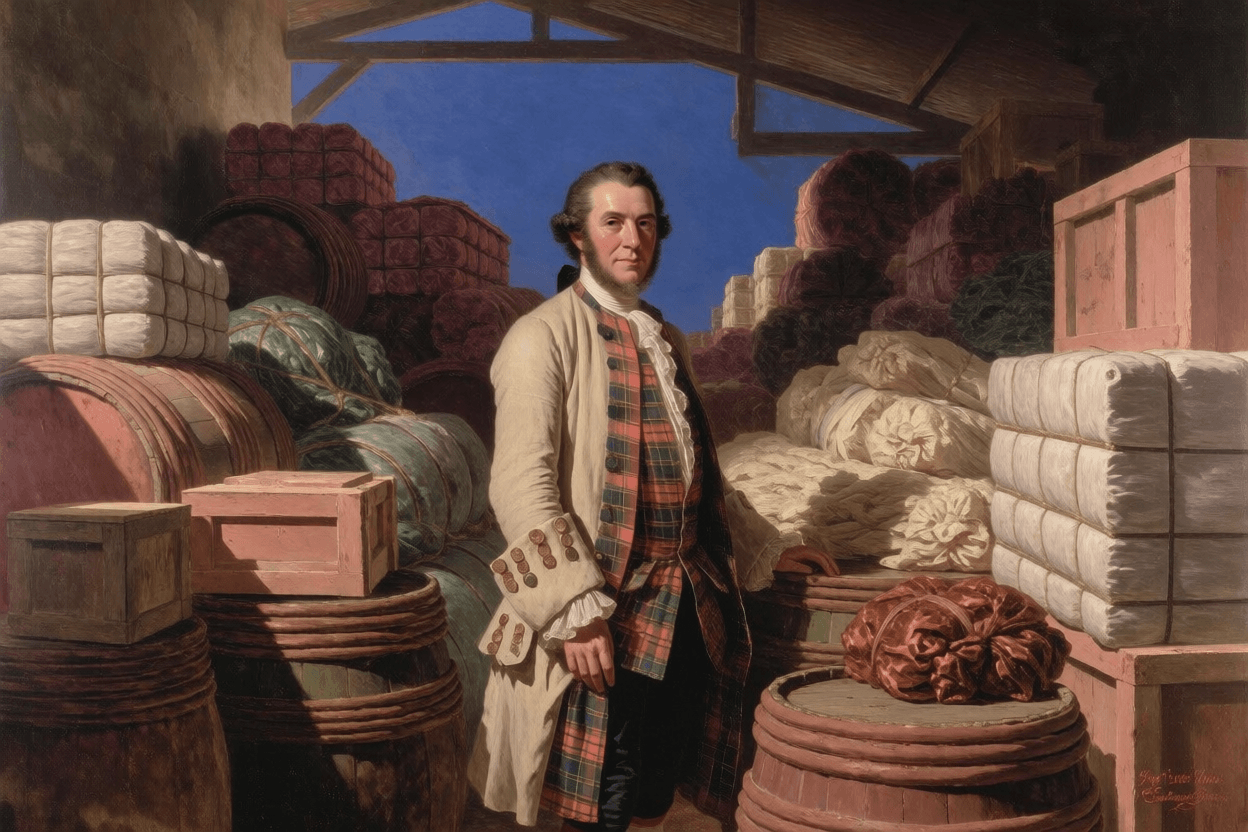
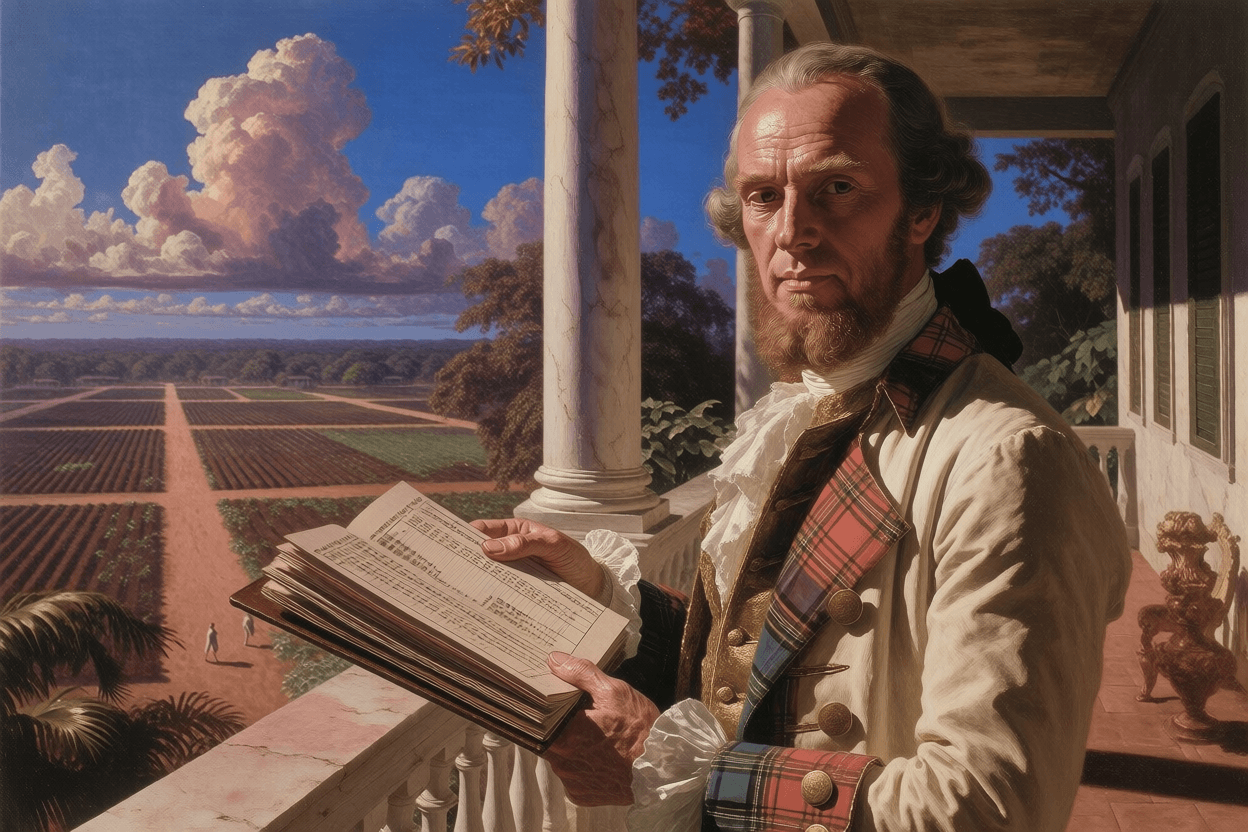
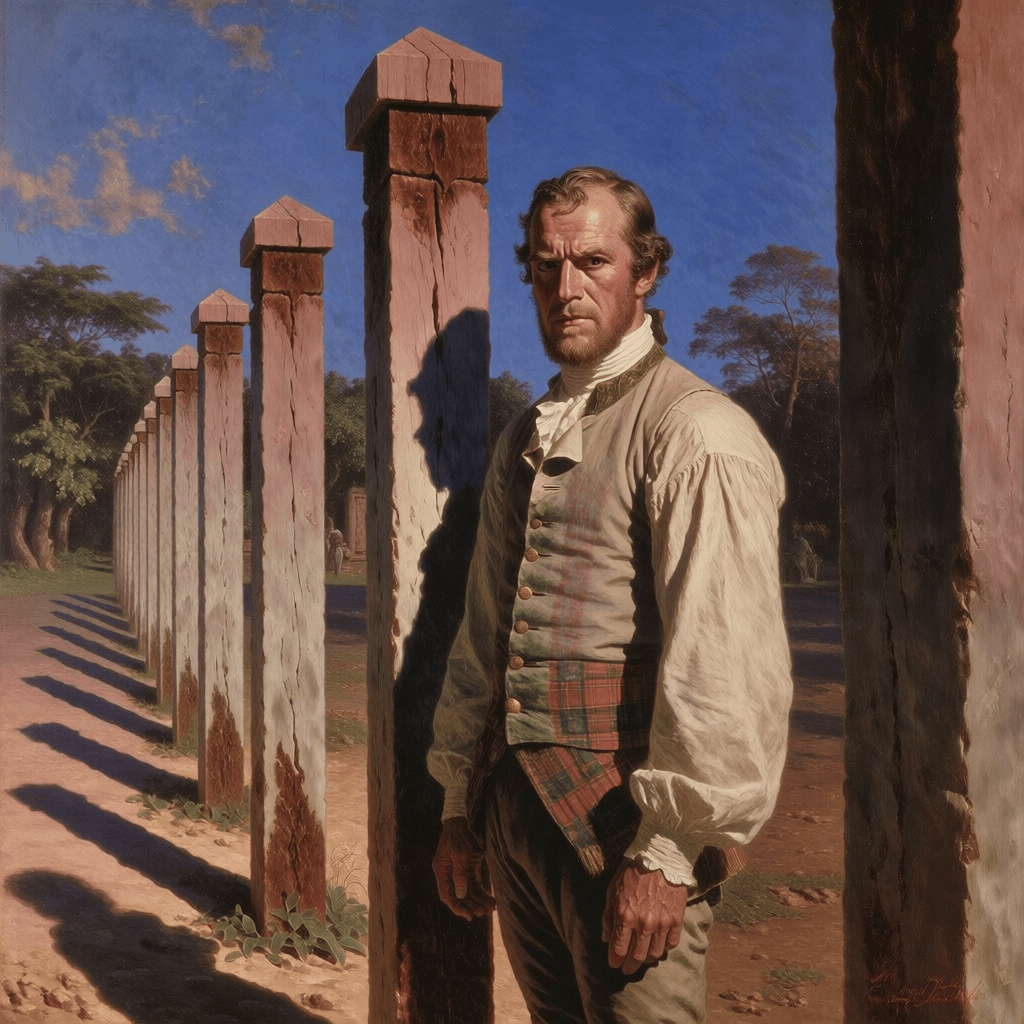
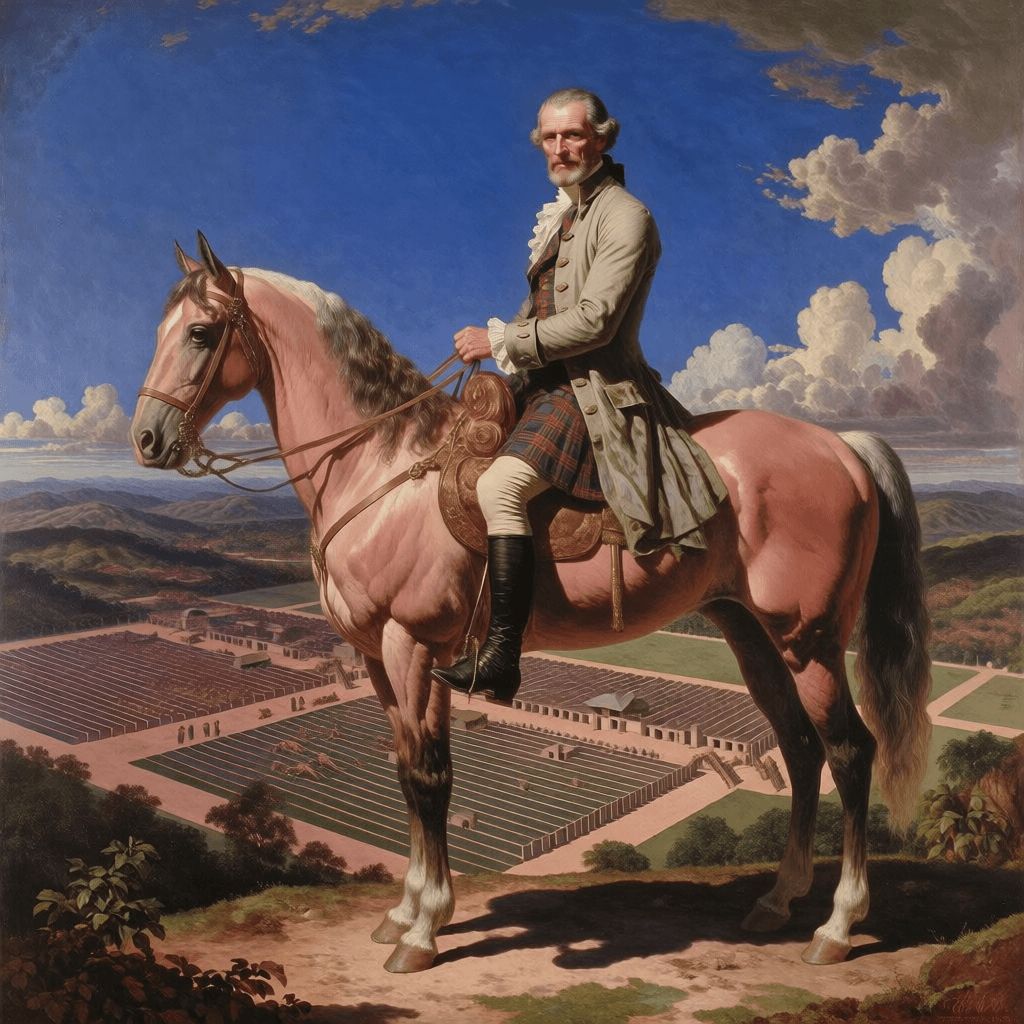
Likenesses
Visual references for the Mackinnon lineage. These are imagined likenesses, not period photographs.
Dr Daniel Mackinnon
Daniel Mackinnon, also recorded as Mackinen, Mackinin, or MacKennon, was the founding figure of the Mackinnon family's Antiguan plantation wealth. He arrived in Antigua as a ship's physician and became the owner of a sugar plantation. His son William later inherited plantations and enslaved people from him.
Daniel is said to have emigrated to Antigua between sixteen seventy-eight and sixteen eighty-eight. Antigua Sugar Mills connects him with Drapers, Golden Grove, and Dickenson's Bay, the area later associated with Mackinnon's Estate.
Contemporary colonial sources present him as a forceful land accumulator. In seventeen hundred and eight, Governor Parke described him as a former ship surgeon who had displaced poor settlers from land. In seventeen eighteen, George French accused him of using medical practice and land acquisition to build a large fortune and of driving poor families away to enlarge his estate. These were hostile contemporary claims and should be treated as allegations rather than neutral evidence.
Daniel Mackinnon died in seventeen twenty, aged about sixty-two.
William Mackinnon
Circa sixteen ninety-seven to seventeen sixty-seven
William Mackinnon was the son of Dr Daniel Mackinnon. He probably was born in Antigua, although the exact place is uncertain. He inherited plantations and enslaved people from his father.
He represented Dickenson's Bay in the Antiguan Assembly from seventeen twenty-three to seventeen sixty-five. His political position placed him inside Antigua's colonial ruling class.
Bath Abbey Memorials describes him as a plantation owner. Correspondence connected to Abraham Redwood shows William Mackinnon treating enslaved people as commercial property. In one seventeen fifty-three update about Redwood's plantation, Mackinnon reported a total of one hundred seventy-nine enslaved people.
His will passed plantation wealth down the family line. He left his estate to his son William Mackinnon, born in seventeen thirty-two, and that inheritance later moved into the line of William Alexander Mackinnon.
William Mackinnon
Seventeen thirty-two to eighteen hundred and nine
William Mackinnon, born in seventeen thirty-two, was the grandfather of William Alexander Mackinnon. He belonged to the Mackinnon family line that owned estates and enslaved people in Antigua.
The Pantheons project at the University of York describes him as a sugar producer in Antigua and connects him to “Mackinnon's Sugar-Mill” in St John's Parish. He lived between Binfield in Berkshire and Antigua, showing the absentee pattern common among British Caribbean enslavers.
He served on Antigua's governing council from seventeen sixty-four to seventeen ninety-eight. His position linked plantation ownership with colonial political authority.
He died in eighteen hundred and nine. In eighteen seventeen, after his death but while the estate remained within the family network, the property was worked by nearly three hundred enslaved people.
William Mackinnon
Seventeen sixty to seventeen ninety-four
William Mackinnon was the father of William Alexander Mackinnon. He was part of the same Antiguan plantation-owning line. People Australia states that William Alexander Mackinnon's father, grandfather, great-grandfather, and great-great-grandfather all owned estates and enslaved people in Antigua.
William Mackinnon held the estate and died at sea while returning from Antigua. His death connects him directly to the family's movement between Britain and Antigua.
He married Harriet Frye, daughter of Francis Frye, a wealthy Antiguan planter. This marriage connected the Mackinnon family to another Antiguan planter family.
Major-General Henry Mackinnon
Seventeen seventy-three to eighteen twelve
Henry Mackinnon was the son of William Mackinnon, born in seventeen thirty-two. The Pantheons project states that he received a sizeable share in the family's slave-worked business, settled on him by his mother before her death in seventeen ninety-four.
Henry became a British army officer. He was killed at Ciudad Rodrigo in eighteen twelve.
In his will, Henry left an annuity of two hundred pounds for his wife Catherine. This annuity was to be paid from profits from his share of the estate and other property in Antigua.
After his death, his share was transferred to his brother Daniel Mackinnon and his brother-in-law George Call.
Catherine Mackinnon
Née Call
Catherine Mackinnon, also recorded as Catherine Call, was the wife of Major-General Henry Mackinnon. LOD Enslaved.org, using Legacies of British Slavery data, records her under Antigua thirty-five dash one hundred eighty-nine and gives her status as “Enslaver or Owner.”
She was probably the sister of George Cotsford Call.
People Australia states that William Alexander Mackinnon and his aunt Catherine, née Call, received two thousand three hundred seven pounds, thirteen shillings, and seven pence as their share of compensation for enslaved people on Mackinnon's Estate.
Her connection to the estate came through marriage, inheritance, and compensation.
William Alexander Mackinnon
Seventeen eighty-four to eighteen seventy
William Alexander Mackinnon was born in Dauphiné, France, to William Mackinnon and Harriet Frye, both of Antigua. People Australia states that his father, grandfather, great-grandfather, and great-great-grandfather all owned estates and enslaved people in Antigua.
In eighteen hundred and nine, he succeeded his grandfather as the thirty-third chief of the Clan Mackinnon.
He became a British politician, a Tory member of Parliament, a bank director, and later a colonization commissioner for South Australia. People Australia states that much of his wealth derived from generations of family plantations worked by enslaved people.
In eighteen thirty-four, William Alexander Mackinnon and Catherine Mackinnon received a share of the compensation for the enslaved people on Mackinnon's Estate.
Daniel Mackinnon
Born seventeen ninety-one, died eighteen thirty-six
Daniel Mackinnon was the younger brother of William Alexander Mackinnon.
After Major-General Henry Mackinnon's death, Henry's share in the Antigua estate was transferred to Daniel Mackinnon and George Call. Daniel's role was therefore part of the later inheritance network around Mackinnon's Estate.
His connection to the estate came through family transfer of slave-worked property.
Louisa Barnes
Née Mackinnon
Louisa Barnes, née Mackinnon, appears in the compensation history of Mackinnon's Estate. Antigua Sugar Mills lists Reverend Henry Barnes and Louisa Barnes, née McKinnon, among the five claimants for the compensation award connected to the estate.
LOD Enslaved.org records Louisa Barnes under Antigua thirty-five dash one hundred eighty-nine. It states that Reverend Henry Barnes counterclaimed for compensation as executor of Louisa Barnes, who was a legatee of William Mackinnon.
Her claim was tied to inheritance from the Mackinnon plantation-owning family.
Reverend Henry Barnes
Reverend Henry Barnes was married to Louisa Mackinnon. Antigua Sugar Mills lists Reverend Henry Barnes and Louisa Barnes among the five compensation claimants for Mackinnon's Estate.
A Forest of Dean family-history forum, drawing on Legacies of British Slave-ownership material, describes Reverend Henry Barnes of Monmouth as counterclaiming compensation as executor of Louisa Barnes, daughter and legatee of William Mackinnon.
His role appears to have been legal and financial rather than managerial. He was connected to Mackinnon's Estate through marriage, executorship, and the compensation process.
George Cotsford Call
George Cotsford Call appears in the Mackinnon's Estate compensation network. Antigua Sugar Mills lists him among the awardees connected with the estate.
The Pantheons project states that Henry Mackinnon's share in the Antiguan estate was transferred to Henry's brother Daniel Mackinnon and his brother-in-law George Call.
His connection to Mackinnon's Estate came through family marriage and transfer of shares in slave-worked property.
Edmund Vernon Mackinnon
Edmund Vernon Mackinnon was an unsuccessful claimant for compensation for Mackinnon's Estate.
LOD Enslaved.org describes him as very likely the son of Daniel Mackinnon and Rachel, née Yeamans. It gives his status as “Enslaver or Owner” in relation to Antigua thirty-five dash one hundred eighty-nine.
Antigua Sugar Mills also lists Edmund Vernon McKinnon among the unsuccessful claimants.
His profile belongs to the legal aftermath of slavery on Mackinnon's Estate, specifically the contest over compensation money after abolition.
Rachel Mackinnon
Probably Rachel Yeamans
Rachel Mackinnon appears in the compensation records as an unsuccessful claimant connected with Mackinnon's Estate. Antigua Sugar Mills lists Rachel McKinnon among the unsuccessful claimants and links her to Yeamons.
Search results from LOD Enslaved.org and genealogical sources connect Rachel Yeamans or Rachel Yeamans Eliot with Daniel Mackinnon and Edmund Vernon Mackinnon.
The exact line of her claim needs verification against the original T seventy-one compensation papers before being presented as a complete genealogy.
Other Recorded Claimants and Awardees
The compensation file for Mackinnon's Estate included a wider circle of claimants, awardees, trustees, executors, and beneficiaries. Antigua Sugar Mills lists the following additional people in the compensation record. The public summary gives their names and roles, but not enough detail to safely reconstruct full biographies without checking the original compensation files.
- John Daniel — Claimant
- Richard Davis — Claimant
- Frances Keenan — Claimant
- Samuel Boddington — Awardee
- Reverend Thomas Cardale — Awardee
- William McKinnon — Awardee and deceased beneficiary in related records
- Henry McKinnon — Beneficiary