Atlantic crossings, regional origins, and what can and cannot be said about Mackinnon's
The Forced Journey to Antigua
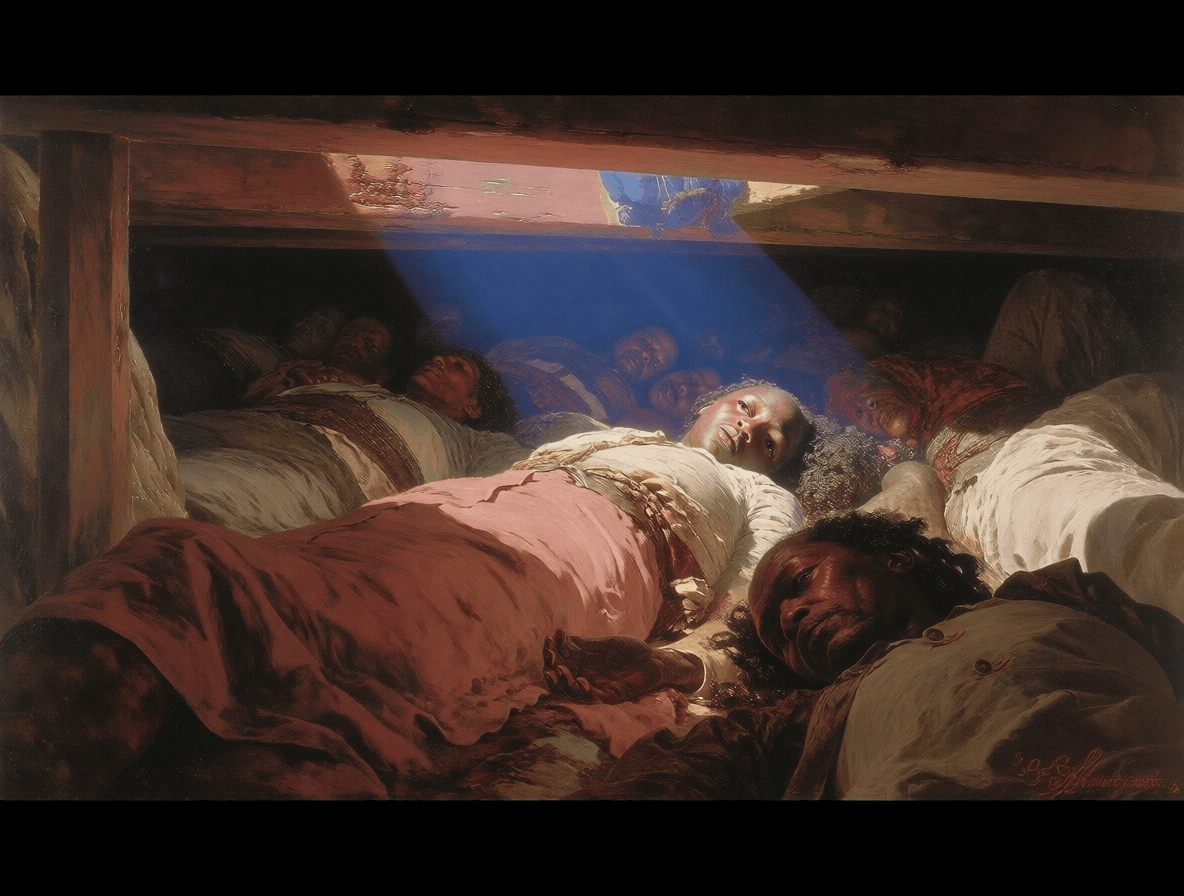
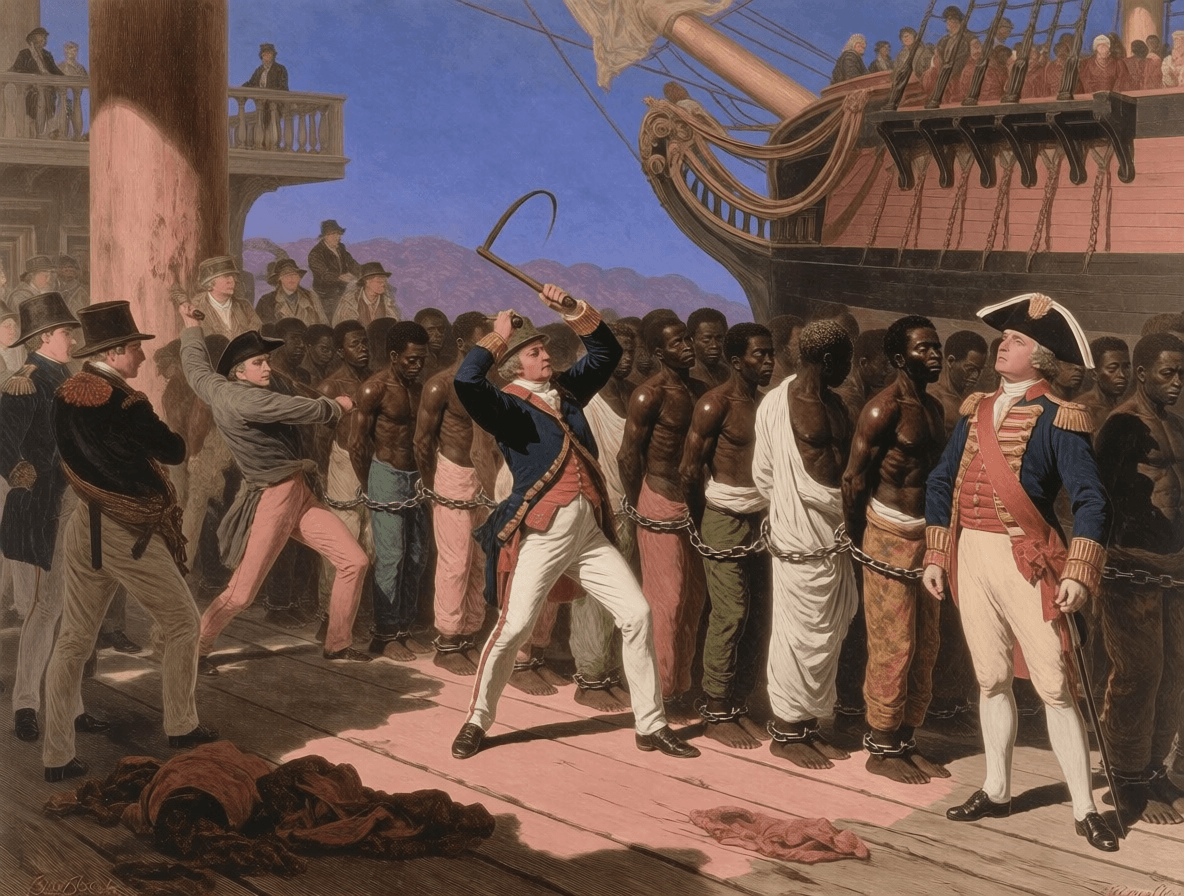
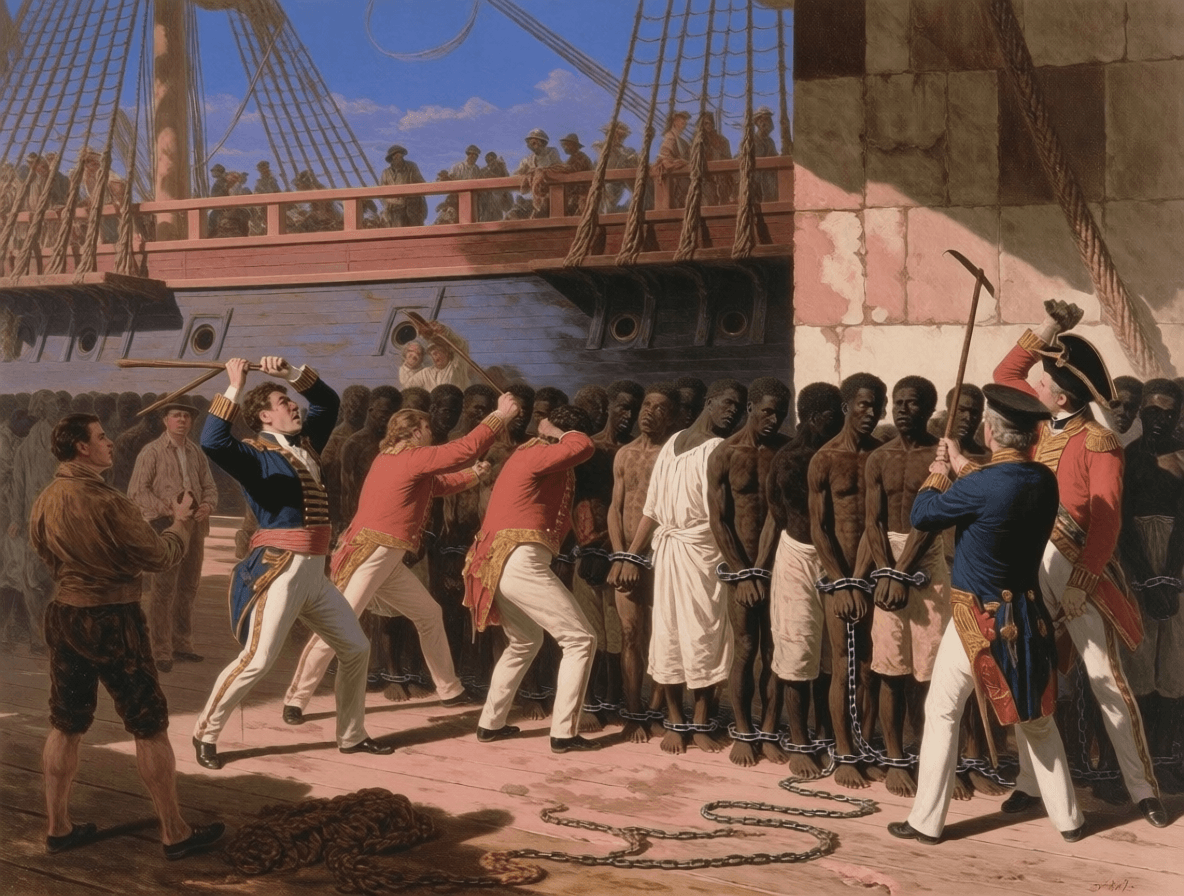
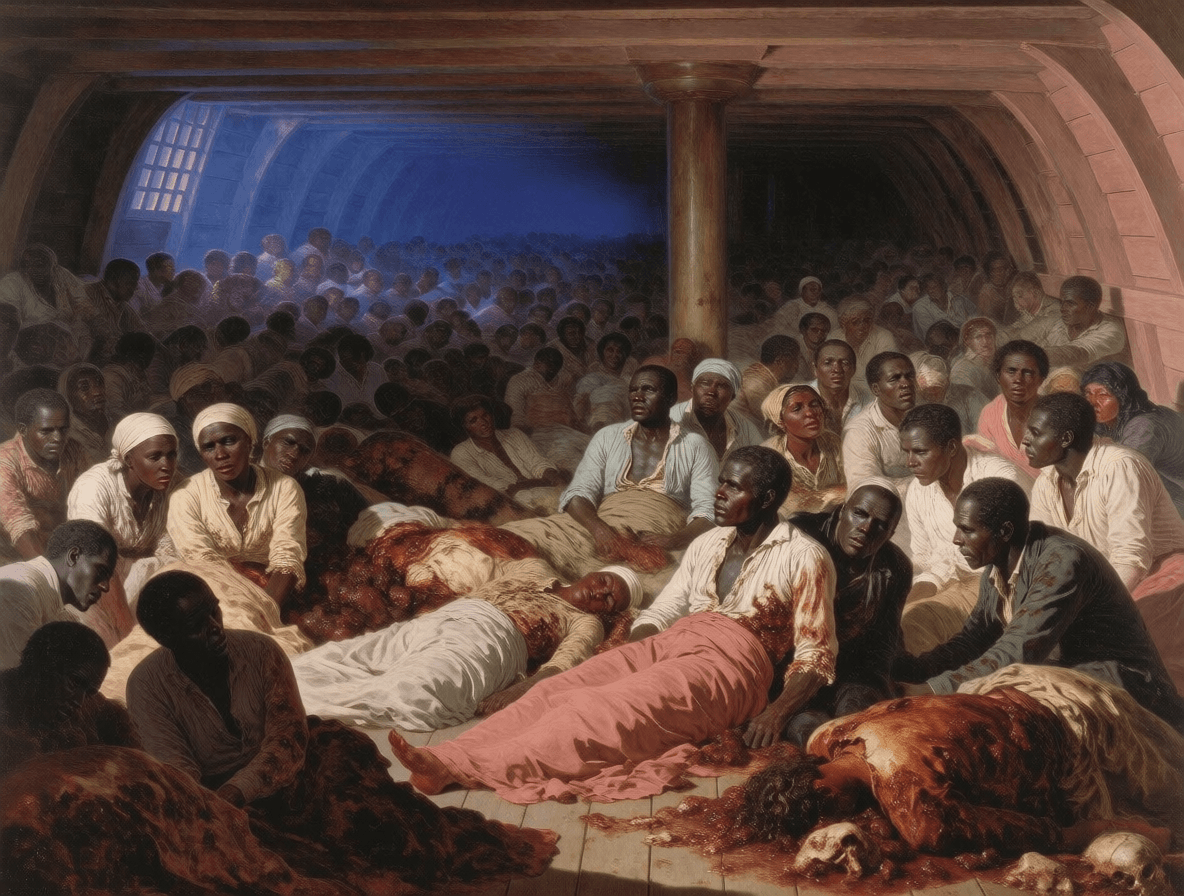
Plates from the Forced Journey
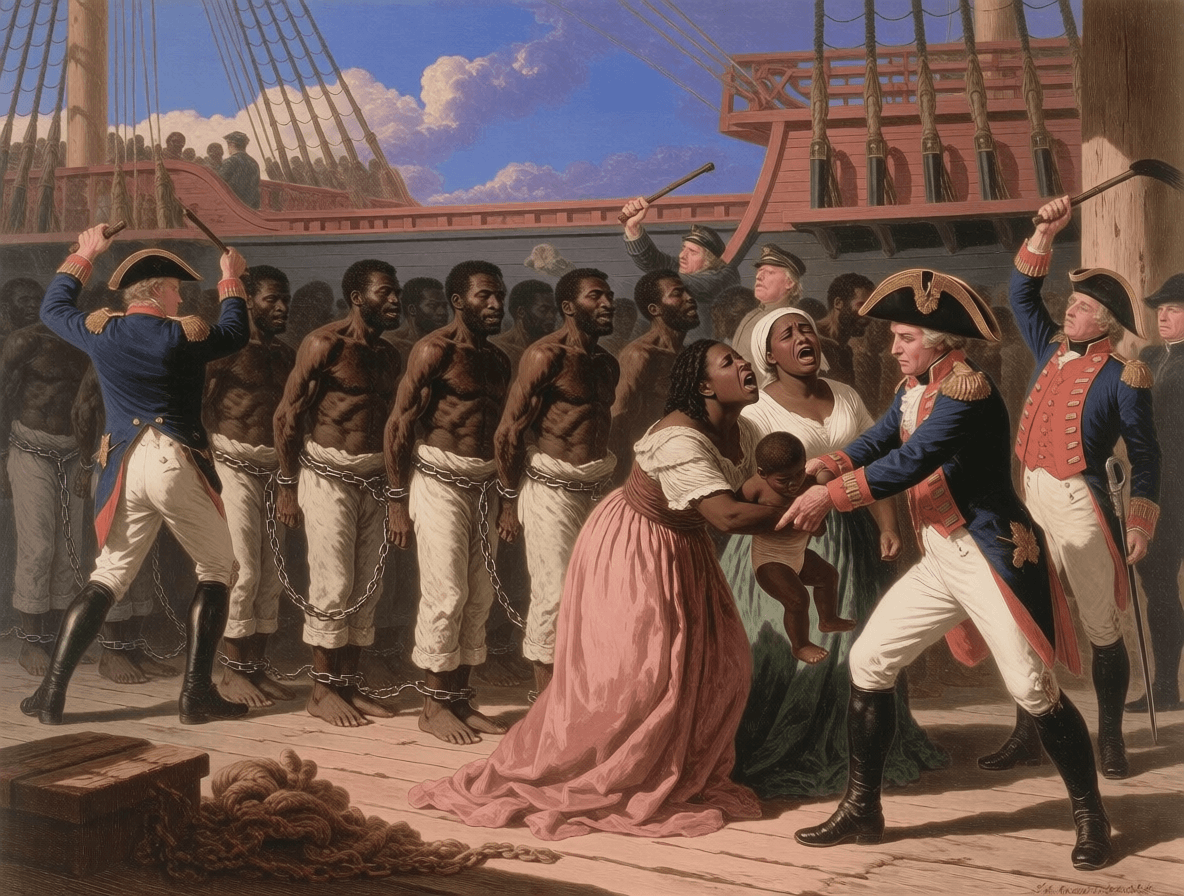
Imagined visualisations of embarkation, the Atlantic crossing, and arrival. Not period photographs.
Antigua and the Atlantic
The enslaved people brought to Antigua came through the wider British Atlantic slave trade. They were taken from several regions of West and West-Central Africa, forced onto European slave ships, transported across the Atlantic, sold in the Caribbean, and then moved into plantation labour. Antigua was one of the British sugar colonies where enslaved African labour became the base of land value, plantation output, and planter wealth.
For Antigua as a whole, surviving evidence points to a mixed African-origin population. Moravian Church registers from Antigua, covering the period from seventeen fifty-seven to eighteen thirty-three, recorded both locally born “creole” people and African-born people. In those records, seven thousand eight hundred ninety-four people were listed as born in Antigua, while three thousand two hundred fifty-five were listed as African-born. The largest identified African-origin group was Igbo, followed by Kongo, Coromantee, Guinea, Kanga, Socco, and Papaw.
Main African Regions Connected to Antigua
The clearest Antigua-specific evidence comes from Moravian records, not from Mackinnon's Estate records. Those records identify people connected to many African regions and labels used in the eighteenth-century Atlantic world.
The strongest recorded regional grouping was the Bight of Biafra, especially people identified as Igbo. The Moravian register table lists eight hundred ninety-four Igbo individuals and one thousand thirty-eight people in the Bight of Biafra category overall. This points toward southeastern Nigeria and nearby coastal trading zones such as Bonny and Calabar as major points of origin or embarkation for many people who ended up in Antigua.
A second major grouping was Central Africa, especially people identified as Kongo. The same records list four hundred twenty-seven Kongo individuals and six hundred eighty-eight people in the Central Africa category overall. These labels point broadly toward the Kongo, Loango, Cabinda, and wider West-Central African trading zone, though they should not be treated as exact modern national identities.
Another major grouping was the Gold Coast, especially people identified as Coromantee. The records list three hundred ninety Coromantee individuals and four hundred fourteen people in the Gold Coast category overall. In British Caribbean usage, “Coromantee” was often linked to the Gold Coast, especially present-day Ghana, but the label could compress different Akan and neighbouring identities into one colonial category.
Other recorded origins included Senegambia, Sierra Leone, the Windward Coast, and the Bight of Benin. The Moravian table lists one hundred fifty-six people under Senegambia, one hundred forty-nine under Sierra Leone, two hundred forty-three under the Windward Coast, and two hundred twenty-six under the Bight of Benin.
How They Were Brought to Antigua
The journey usually began with capture, sale, kidnapping, warfare, debt seizure, punishment, or commercial transfer within African systems that had become violently tied to Atlantic demand. Captives were moved toward coastal trading points, held before sale, inspected by European buyers, and loaded onto slave ships. The Atlantic crossing was the Middle Passage.
For those who survived the crossing, arrival did not mean safety. Captives were disembarked, inspected again, sold, and moved into plantation labour. In the British Caribbean, this usually meant sugar production. The Equal Justice Initiative summarises the Caribbean pattern directly: most enslaved people who survived the Middle Passage arrived in the Caribbean or South America, and sugar plantations were among the most dangerous and lethal labour regimes in the Americas.
Antigua also received enslaved people through intercolonial movement, not only direct arrivals from Africa. People could be sold or moved between Caribbean colonies. Catron's work on Antigua's Moravian registers records Afro-Moravians moving or being transported from Antigua to other colonies, including St Vincent, Dominica, Grenada, Trinidad, Montserrat, St Kitts, Demerara, Barbados, Jamaica, Tobago, and others. That evidence shows Antigua was part of a regional Caribbean circulation system as well as a direct Atlantic destination.
Locally Born and African-Born People in Antigua
By the later eighteenth and early nineteenth centuries, Antigua's enslaved population included many people born on the island. In the Moravian records, locally born people were the majority across the full period from seventeen fifty-seven to eighteen thirty-three. Catron gives eleven thousand one hundred eighty Afro-Moravians in one table, with seven thousand nine hundred twenty-five listed as creoles and three thousand two hundred fifty-five listed as Africans.
This matters for Mackinnon's Estate because the enslaved population there in the eighteen twenties and eighteen thirties was probably not made up only of people recently arrived from Africa. By that point, many enslaved people in Antigua were Antigua-born, while still carrying African ancestry, languages, religious practices, kinship memory, and cultural inheritance from earlier forced migrations.
Mackinnon's Estate: What Can Be Said Directly
For Mackinnon's Estate specifically, a public source has not been found that gives a list of African birthplaces, ethnic labels, embarkation ports, or slave-ship names for the people enslaved on the estate. The available public records are much stronger for ownership, acreage, compensation, and total numbers than for the forced migration histories of the enslaved individuals themselves.
Antigua Sugar Mills says that Mackinnon's Estate was in St John's Parish, with the estate connected to the Dickenson's Bay area. It records the estate as having two hundred seventy-one enslaved people in eighteen twenty-nine and receiving compensation for two hundred seventy-eight enslaved workers after British abolition. People Australia gives a related figure of two hundred seventy-nine enslaved people connected to the compensation received by William Alexander Mackinnon and Catherine Mackinnon.
The same Antigua Sugar Mills page states plainly that, based on contemporary research, there is little information currently available about the enslaved people from Mackinnon's plantation. That means any claim assigning Mackinnon's enslaved population to a specific African ethnic origin would be an inference from Antigua-wide evidence, not a documented Mackinnon-specific fact.
Mackinnon-Specific Human Evidence: Juncho
One named person connected to Mackinnon's Estate is Juncho, an elderly woman formerly enslaved on McKinnon's estate. She appears in Antigua and the Antiguans, where the author says she knew Juncho when Juncho had been enslaved on McKinnon's estate. Juncho described slavery as forced labour, loss of control over family life, and the inability to stay with a sick child because she was required to work in the field.
Juncho's testimony does not give her African origin. It does, however, place a named formerly enslaved woman directly on Mackinnon's Estate and records plantation labour from her perspective. Her account includes work in cane cultivation, field labour, and the forced separation of a mother from a sick child during the working day.
The same source says that by the time it was written, there were “not many Africans now in Antigua who were brought there as slaves,” because many had died, while other Africans present on the island had been liberated from captured slave ships and brought to Antigua under British naval anti-slave-trade policy. This supports the point that by the post-emancipation period, many formerly enslaved Antiguans were locally born rather than direct African arrivals.