McKinnon's Salt Pond
◀ back to all placesalso known as: McKinnons Salt Pond · McKinnon's Pond · McKinnon's Saltpond IBA
A coastal salt pond and former mangrove-lined lagoon on the west-facing shore of north-west Antigua. The pond carries forward, in its name, the surname of the plantation-owning family whose estate once occupied the surrounding landscape.
At a glance
Names and spellings
The site appears in modern environmental sources as McKinnon's Salt Pond, McKinnons Salt Pond, McKinnon's Pond, and McKinnon's Saltpond IBA.
The older plantation record uses related spellings for the family and estate, including Mackinnon, McKinnon, Mackinin, and MacKennon.
The pond name is best read as a colonial plantation-family toponym retained in the landscape, not as a neutral ecological name.
Location
McKinnon's Pond is on the west-facing coast of north-west Antigua, about three kilometres north of St John's and immediately inland from Runaway Bay.
Its KBA central coordinates are listed as latitude seventeen point one four three five and longitude minus sixty-one point eight four eight five.
The KBA site area is about zero point seventy-eight square kilometres, with an elevation range from zero to two metres.
Physical form
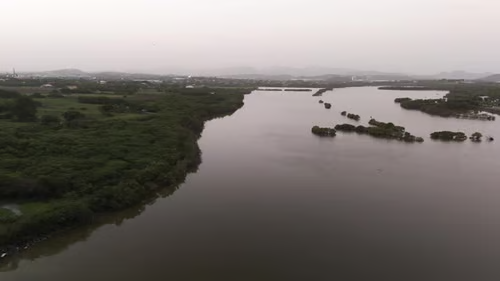
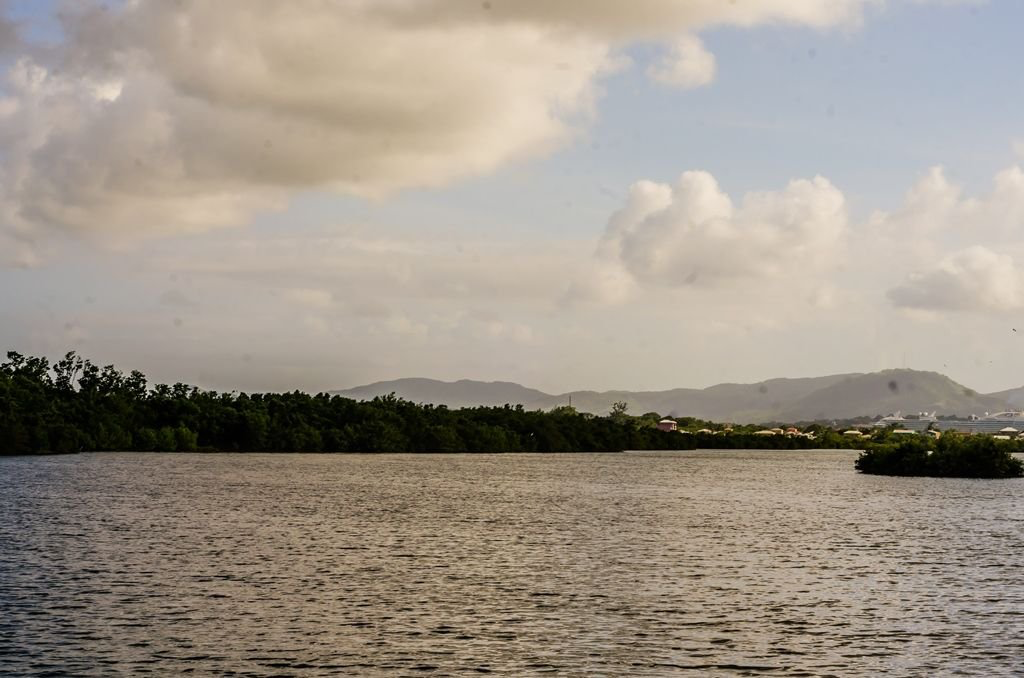
The site is a coastal salt pond and former mangrove-lined lagoon.
Key Biodiversity Areas describes it as once being “the largest natural pond on the island”, before road construction along the western and northern seaward side cut it off from the sea except through a small culvert.
That means the present pond is not only a natural lagoonal feature, but also a heavily modified coastal water body.
Hydrology
The pond belongs to the north-west McKinnon's watershed.
The Adaptation Fund project document describes the watershed as part of one of Antigua's thirteen main watersheds, with waterways flowing through populated outskirts of St John's and draining into McKinnon's Pond.
The same document describes the pond as a two-square-kilometre mangrove salt pond within the landscape and hydrology of the area.
Connection to the sea
The pond's historical marine exchange was altered by road construction.
KBA records state that a road along the western and northern seaward side cut the lagoon off from the sea, leaving only a small culvert for limited water exchange.
Caribbean Birding Trail also states that Marina Bay Road borders the pond on the east and that the road restricts the original flow of ocean waters.
Mangroves and shoreline alteration
The pond was formerly lined with mangroves.
KBA records state that increased water levels after the road blockage killed the majority of the mangroves, leaving much of the shoreline open and fringed by dead mangrove remains, with only small degraded stands on the southern and western seaward edges.
The Environmental Awareness Group likewise states that much of the mangrove was destroyed because the road cut the pond off from the sea.
Built structures inside and around the pond
A man-made causeway crosses the pond and carries fuel lines from an offshore facility to the storage area of an oil refinery.
KBA records state that this causeway isolates the southernmost section from the main body of water.
The same source records extensive resort development and private homes around and adjacent to the pond.
Surrounding land use
The north-west coast around the pond has mixed land uses.
The Adaptation Fund project document identifies residential urban and suburban settlement as the dominant land use, tourism along Dickenson and Runaway beaches, industrial activity including West Indies Oil and APUA power stations, plus smaller areas of vegetable farming, livestock, commercial activity, public recreation and community facilities.
Pollution and degradation
The IWEco Antigua and Barbuda project document identifies McKinnon's Pond as a nationally noticed critical area in north-west Antigua, close to farms and tourism developments, and says it has been severely degraded by pollution influxes.
It also names land degradation, improper liquid waste disposal, sewerage sludge and oily waste residues as major concerns in the broader sustainable land-management context.
Wastewater infrastructure
The McKinnons wastewater treatment facility was developed under earlier IWCAM work and later targeted for expansion under IWEco.
The IWEco document says the facility was to be expanded to handle increased capacity, reducing sewage deposited at the national landfill and illegal sites, with treated greywater intended for irrigation of cropland in the McKinnon's area.
Sediment, runoff, and watercourses
IWEco planned hydrological assessments in the Cedar Grove Watershed to identify pollution sources and unstable watercourse embankments flowing into McKinnon's Pond.
It also proposed runoff-control measures, vegetated drainage channels, soil-conservation works and mangrove plantings around McKinnon's Pond to reduce land and shoreline degradation and contaminant discharges to the adjacent marine environment.
Flooding
The Adaptation Fund project identifies the north-west McKinnon's watershed as a high-risk, populated watershed.
Its project page says the area is vulnerable to climate change, urban expansion and extreme rainfall, and that the project sought to increase the watershed's ability to handle extreme rainfall through drainage and wetland-restoration interventions.
The project document includes recorded flood-related problems: water evacuation toward McKinnon's Pond, expansion of the pond area southward during flood events into household development at Yorks, debris-catching pipes in waterways, and the pond being almost dry after an extended three-year drought.
Ecology
The site is a confirmed Key Biodiversity Area and former Important Bird and Biodiversity Area.
KBA records identify the site as marine and terrestrial, with inland wetland, forest and shrubland habitat coverage. It supports waterbirds, migratory shorebirds and nearby hawksbill turtle nesting beaches.
Recorded birds include Brown Pelican, Least Tern, Laughing Gull, West Indian Whistling-duck, Little Egret, White-cheeked Pintail, Caribbean Coot, Black-necked Stilt and Wilson's Plover.
Protection status and ownership
KBA's last assessment was in two thousand nine. In that assessment, McKinnon's Saltpond was listed as under mixed ownership and “not protected in any way”, with different landowner claims over parts of the pond.
Later project documents proposed legal and planning controls, including an Ecosystem-based Adaptation Local Area Plan and a Special Development Area framework, but no source proves that the whole pond has been formally converted into a protected area.
Dredging
KBA records state that the Government's Environment Division was dredging the pond to reduce flooding and improve the area's appearance at the time of assessment.
The same record states that the West Indian Whistling-duck had not been seen in the IBA since dredging started.
Name origin and plantation connection
The name comes from the McKinnon or Mackinnon estate landscape in St John parish.
The Antigua Sugar Mills record identifies McKinnon as a sugar-mill ruin in St John, founded in the seventeen hundreds.
It states that no sugar mill remains and that all traces of the estate have been erased by modern residential construction, with homes facing west over “McKinnon's swamp”, Dickenson Bay and Runaway Bay.
Toponymic reading
The pond's name preserves the surname of a plantation-owning family whose estate occupied the surrounding landscape.
The site's modern ecological name, McKinnon's Salt Pond, therefore carries forward the name of the plantation estate and its enslaver ownership history.
The available sources do not give a single dated act of naming for the pond itself, but the historical chain is clear: McKinnon and Mackinnon estate, McKinnon's swamp, McKinnon's Pond.
Sources
- Key Biodiversity Areas (KBA) record for McKinnon's Saltpond, last assessment 2009
- Caribbean Birding Trail entry for McKinnon's Pond
- Environmental Awareness Group, McKinnon's Pond field resources
- Adaptation Fund project document, north-west McKinnon's watershed, Antigua
- IWEco Antigua and Barbuda project document, with reference to predecessor IWCAM works
- Antigua Sugar Mills database, McKinnon entry, Saint John parish